
Choosing the Right Road Construction Company in Pakistan for Infrastructure Projects
A road may look complete when the asphalt is smooth, the lane markings are visible, and vehicles begin using it. However, the quality of a road is determined long before the final surface is installed.
The strength of the underlying soil, thickness of pavement layers, quality of construction materials, drainage arrangements, and precision of compaction all influence how well a road performs over time.
For developers, government organisations, industrial estate owners, and infrastructure planners, selecting the right road construction company in Pakistan is an important decision.
Road construction requires specialised engineering knowledge and careful execution. A contractor must understand not only how to construct a road but also how traffic loads, weather conditions, water, and maintenance requirements affect its long-term performance.
This guide explains seven essential factors to consider when evaluating road construction contractors in Pakistan, with a particular focus on pavement engineering, construction quality, road safety, and durability.
Understanding the Scope of Road Construction in Pakistan
Road construction projects vary significantly in size and complexity.
A residential access road has different requirements from an industrial freight route or a major highway.
The type of traffic, expected vehicle loads, ground conditions, and intended service life influence the engineering design and construction process.
Common road construction projects include:
- National highways and major transportation routes.
- Urban roads and municipal streets.
- Industrial estate access roads.
- Housing development road networks.
- Rural and agricultural access roads.
- Road widening and rehabilitation.
- Asphalt resurfacing and pavement improvements.
Each project requires a construction approach appropriate to its intended purpose.
A reliable contractor should be able to explain the required construction sequence, quality checks, and site-specific challenges before work begins.
1. Understand the Road Construction Method and Pavement Type
One of the first considerations when choosing a road construction company in Pakistan is whether the contractor understands the pavement system specified for the project.
Different roads require different pavement structures.
The correct choice depends on engineering design, traffic requirements, site conditions, and available materials.
Discover how asphalt layers work together to strengthen road structures.
Flexible Pavement Construction
Flexible pavement generally consists of asphalt layers supported by granular base and sub-base materials.
The pavement distributes vehicle loads through the underlying layers.
A typical flexible pavement structure may include:
Subgrade: The prepared natural soil or engineered fill supporting the road.
Sub-base: A selected material layer that provides additional support and helps protect the pavement structure.
Base course: A stronger layer designed to distribute traffic loads and support the surface.
Asphalt layers: Bituminous materials that provide the required riding surface and contribute to structural performance.
The exact layer arrangement and thickness must follow the approved pavement design.
Rigid Pavement Construction
Rigid pavement generally uses concrete slabs to distribute traffic loads.
Concrete pavements may be considered for particular industrial facilities, heavy-duty traffic areas, or other applications where their performance characteristics are suitable.
Construction requirements may include slab thickness control, joint formation, reinforcement or load-transfer details where specified, and appropriate curing.
Choosing the Appropriate Method
Neither asphalt nor concrete is automatically the best choice for every road.
The selection should consider traffic loading, environmental conditions, initial construction costs, maintenance needs, and lifecycle performance.
Project owners should expect contractors to follow the approved engineering design rather than substitute materials or methods without authorisation.
2. Examine Subgrade Preparation and Compaction Standards
A durable road requires a stable foundation.
Even a high-quality asphalt surface can deteriorate if the supporting ground is poorly prepared.
Subgrade preparation is therefore one of the most important stages of road construction.
Site Clearing and Formation
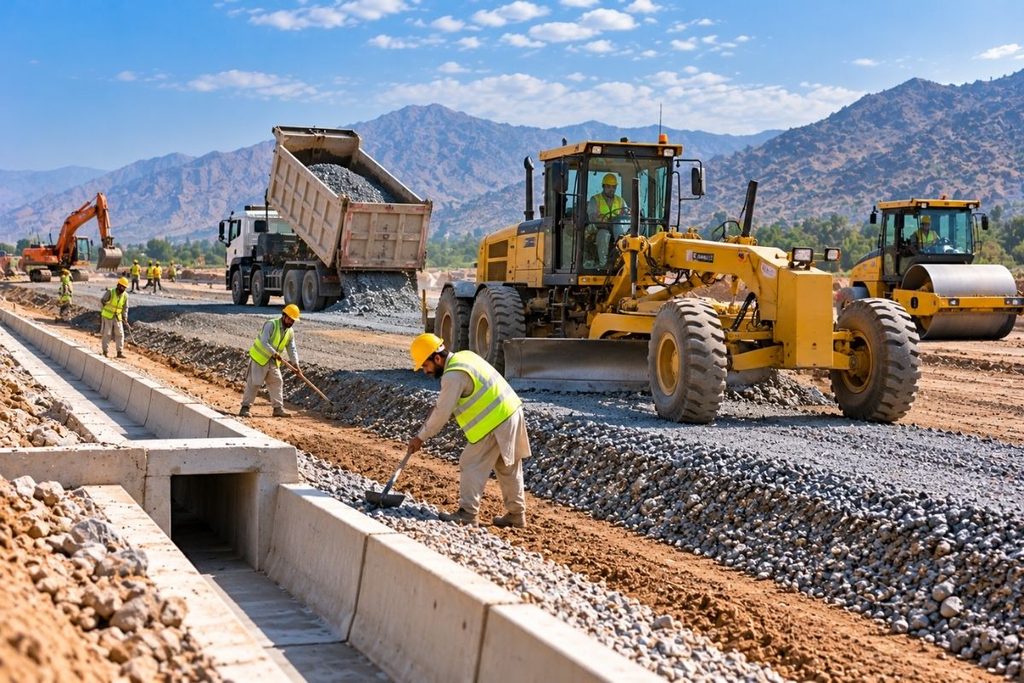
Construction usually begins with clearing unsuitable surface materials and preparing the road formation.
Depending on the design, this may involve excavation, filling, grading, and moisture conditioning.
The prepared surface should meet the specified alignment, levels, and cross-sectional requirements.
Why Compaction Matters
Compaction increases the density of suitable soil and granular materials by reducing air voids.
Proper compaction helps improve load-bearing performance and reduce excessive settlement.
Inadequate compaction may contribute to:
- Uneven road surfaces.
- Localised settlement.
- Pavement cracking.
- Rutting under traffic.
- Premature maintenance requirements.
Field Density Testing
Contractors may be required to carry out field density tests to verify that compacted layers meet the project specifications.
The required test methods and acceptance limits depend on the contract and approved technical standards.
A professional road contractor should maintain test records and avoid covering layers before required inspections have been completed.
Managing Unsuitable Ground
Some projects encounter weak soils, uncontrolled fill, or moisture-sensitive materials.
Where these conditions are identified, qualified engineers should determine the appropriate treatment.
The contractor must then implement the approved solution and verify the completed work through the required inspection process.
3. Check Asphalt Quality and Pavement Installation Practices
For asphalt roads, material quality and installation procedures directly influence pavement performance.
An asphalt mixture must be suitable for the expected traffic and environmental conditions.
Poor material control or incorrect placement can result in premature cracking, deformation, or surface defects.
Asphalt Mix Design
Asphalt generally consists of aggregates combined with a bituminous binder.
The mixture must satisfy the applicable requirements for grading, binder content, stability, and other performance characteristics.
The approved mix design should be appropriate for the pavement layer and intended use.
Temperature Control
Temperature is an important factor during asphalt production, transportation, placement, and compaction.
If the mixture cools excessively before compaction, achieving the required density may become difficult.
Excessive temperatures can also affect material properties.
The contractor should follow the temperature requirements established by the approved mix design and specifications.
Asphalt Paving Operations
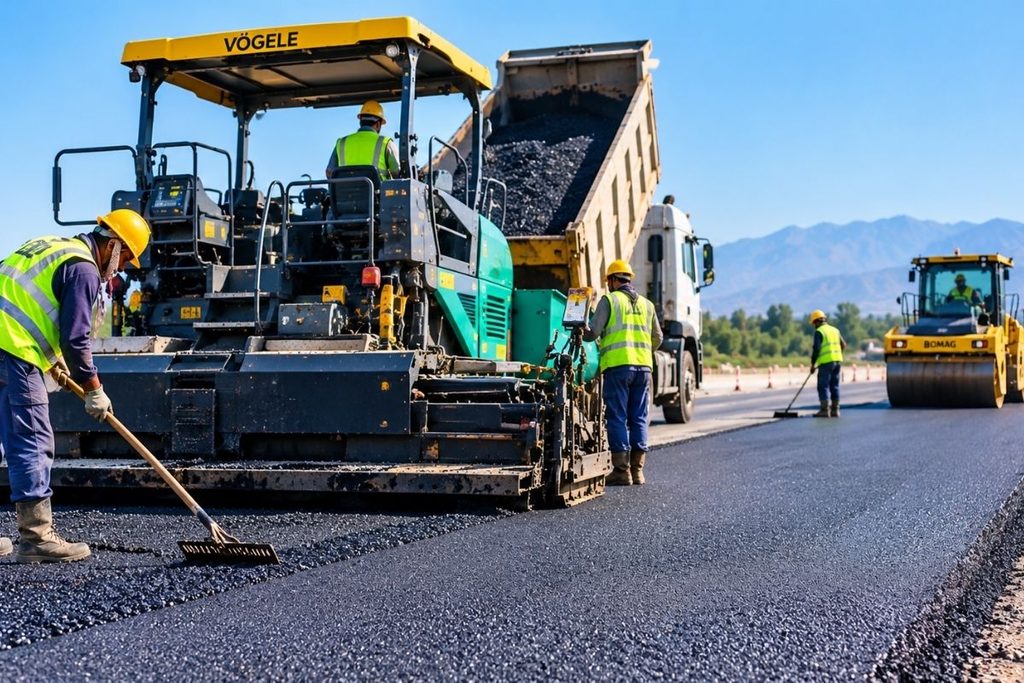
A paving operation should coordinate asphalt delivery, paver movement, and roller activity.
Interrupted material supply can create construction joints or other challenges.
Paving teams should monitor surface levels, thickness, smoothness, and compaction throughout the operation.
Quality Testing
Depending on the project specifications, asphalt quality control may include:
- Aggregate grading tests.
- Binder content verification.
- Mix temperature monitoring.
- Pavement thickness measurements.
- Density and compaction testing.
- Surface smoothness checks.
- Material sampling and laboratory evaluation.
The National Highway Authority of Pakistan is a relevant official resource for information about national highway development and associated project requirements.
Clients should refer to the current specifications included in their own contract rather than assuming one set of requirements applies to every road.
4. Prioritise Road Drainage and Water Management
Water is one of the major contributors to road deterioration.
Poor drainage can weaken supporting materials, damage pavement edges, and accelerate surface defects.
A well-constructed road therefore requires more than a strong pavement surface.
It also needs an appropriate drainage system.
Surface Drainage
Road surfaces are designed with appropriate slopes to direct rainwater away from the travelled lanes.
Crossfall and longitudinal gradients help prevent excessive water accumulation.
The required geometry depends on the road design.
Side Drains and Stormwater Channels
Roadside drainage systems may include open channels, lined drains, catch pits, and underground pipes.
These systems collect and transport runoff away from the pavement.
Their design must account for expected water flows, available discharge locations, and local site conditions.
Culverts and Cross-Drainage Structures
Culverts allow water to pass beneath road embankments or access routes.
Incorrect installation or inadequate capacity can create flooding, erosion, or damage to the surrounding road structure.
Contractors must follow the approved drawings and ensure that the structures are installed at the specified levels and alignments.
Protecting Road Shoulders
Road shoulders support the edge of the pavement and may provide space for emergency stopping or other functions.
Poorly maintained shoulders can allow water to enter pavement layers or contribute to edge deterioration.
Appropriate grading and drainage arrangements help protect these areas.
Drainage Maintenance
Road drainage systems require periodic inspection and cleaning.
Blocked drains may cause water to accumulate even when the original design is adequate.
A suitable handover process should provide the information needed for future maintenance.
5. Evaluate Road Safety and Traffic Management
Road construction affects both workers and road users.
Projects involving existing roads require particular attention to traffic management.
A capable road construction company in Pakistan should be able to demonstrate how it will protect workers, control construction vehicles, and manage traffic during the works.
Work Zone Safety
Temporary traffic management arrangements may include:
- Warning signs.
- Traffic cones and barriers.
- Temporary lane diversions.
- Reduced-speed arrangements.
- Flag personnel where appropriate.
- Safe access for construction vehicles.
- Pedestrian protection where required.
The actual arrangements should follow the approved traffic management plan and applicable requirements.
Protecting Construction Workers
Road construction involves moving vehicles, heavy equipment, hot materials, and changing work environments.
Contractors should provide appropriate training, protective equipment, supervision, and site-specific safety procedures.
Workers must understand the hazards associated with their assigned activities.
Permanent Road Safety Features
Depending on the project, completed roads may require:
- Lane and edge markings.
- Reflective pavement markers.
- Traffic signs.
- Safety barriers.
- Pedestrian crossings.
- Street lighting.
- Roadside delineation.
These features must be installed according to the approved design.
Independent Road Safety Considerations
For major projects, the client may require road safety reviews or audits at specified stages.
These assessments help identify potential hazards before the road enters service.
The World Health Organization’s road traffic injury prevention resources explain why safer road infrastructure is an important component of road safety.
A contractor should treat safety features as essential project components rather than optional finishing details.
6. Compare Road Rehabilitation and New Construction Capabilities
Not every road project requires complete reconstruction.
Some existing roads may be suitable for resurfacing, strengthening, or targeted rehabilitation.
The appropriate treatment depends on the pavement’s condition and the causes of deterioration.
Asphalt Resurfacing
Resurfacing involves placing a new surface layer over an existing pavement after the required preparation.
It may improve riding quality and surface performance when the underlying structure remains suitable.
However, resurfacing alone does not necessarily correct serious foundation problems.
Pavement Milling
Milling removes a controlled depth of existing pavement.
It can help prepare the road for new asphalt layers, correct surface levels, or remove damaged material.
The required milling depth should be based on the approved rehabilitation design.
Patching and Local Repairs
Localised pavement defects may be addressed through appropriate patching methods.
The repair should extend sufficiently to remove defective material and restore the required pavement structure.
Temporary surface filling without addressing underlying problems may not provide a durable solution.
Road Widening
Widening an existing road introduces additional challenges.
The new pavement must connect properly with the existing structure.
Differences in ground conditions, pavement thickness, and settlement behaviour can affect the performance of the widened section.
The contractor should follow the approved details for the connection between old and new construction.
Choosing the Right Rehabilitation Strategy
A responsible contractor should not recommend full reconstruction solely because it creates a larger construction scope.
Likewise, a low-cost resurfacing proposal may be inappropriate when structural failures are widespread.
Clients should seek an engineering assessment that identifies the condition of the existing pavement and the treatment required.
7. Consider Long-Term Road Performance and Maintenance
The true value of a road construction project becomes clearer over time.
A road that performs well immediately after completion may still develop problems if construction quality, drainage, or maintenance arrangements are inadequate.
Project owners should therefore consider the expected service life and maintenance requirements when selecting a contractor.
Understanding Pavement Deterioration
Road pavements are exposed to repeated traffic loading, temperature changes, rainfall, and environmental conditions.
Common pavement defects include:
Cracking: May develop for several reasons, including traffic fatigue, temperature effects, settlement, or construction-related problems.
Rutting: Permanent deformation in wheel paths that may result from weaknesses in pavement materials or supporting layers.
Potholes: Localised pavement failures that can develop when surface defects, moisture, and traffic loads interact.
Ravelling: Progressive loss of aggregate particles from the asphalt surface.
These defects do not all have the same cause.
Correct diagnosis is necessary before selecting a repair method.
Maintenance Planning
Routine maintenance may include drainage cleaning, crack sealing, surface repairs, shoulder maintenance, and road marking renewal.
Maintenance activities should be planned according to the road’s condition and the responsible authority’s requirements.
Lifecycle Cost Considerations
The lowest initial construction price does not always produce the lowest long-term cost.
A pavement requiring frequent repairs may become more expensive over its service life than a properly designed and constructed alternative.
Lifecycle evaluation considers construction expenditure together with expected maintenance and rehabilitation costs.
The Federal Highway Administration’s pavement resources provide additional technical information about pavement engineering and performance.
Handover Documentation
A complete road construction handover may include:
- Approved inspection records.
- Pavement testing results.
- As-built drawings.
- Material documentation.
- Completed quantity records.
- Defect and corrective-action records.
- Relevant maintenance information.
The exact requirements depend on the project contract.
Clear documentation supports future maintenance and helps the client understand the completed asset.
How to Compare Road Construction Quotations
When reviewing proposals, clients should look beyond the total price.
Two contractors may submit significantly different quotations because they have interpreted the work differently.
A meaningful comparison should examine the scope and technical assumptions behind each proposal.
Check Pavement Specifications
Confirm that quotations are based on the same approved pavement design, material requirements, and layer thicknesses.
A lower price may reflect an omitted layer or different material specification.
Review Included Activities
Check whether the quotation includes excavation, unsuitable material removal, drainage, testing, traffic management, road markings, and final cleaning where required.
Unclear exclusions can create additional costs during construction.
Compare Construction Programmes
A shorter programme is not automatically better.
The contractor should explain how the proposed schedule will be achieved while maintaining quality and safety requirements.
Review Testing and Inspection Arrangements
Determine which party is responsible for quality testing, inspection coordination, and corrective work.
These responsibilities should be clear before construction begins.
Examine Defect Responsibilities
The contract should define applicable defect notification periods, repair responsibilities, and completion requirements.
Clients should review these provisions carefully rather than relying on verbal assurances.
Practical Example: Constructing an Industrial Access Road
Consider a hypothetical industrial development requiring a two-kilometre access road suitable for frequent heavy vehicle movements.
The road must connect the industrial facility to an existing public route.
A well-organised construction process could involve the following stages.
Stage 1: Engineering Review
The contractor reviews the approved drawings, pavement design, road alignment, drainage requirements, and available site information.
Any discrepancies are raised before construction.
Stage 2: Formation Preparation
The site is cleared, excavated, or filled as required.
The subgrade is prepared and compacted to the specified standard.
Stage 3: Granular Pavement Layers
Sub-base and base materials are placed in the required layers.
Each layer is graded, compacted, and tested according to the project specifications.
Stage 4: Drainage Installation
Side drains, culverts, and other drainage structures are constructed in coordination with the roadworks.
Required inspections are completed before the relevant works are covered.
Stage 5: Asphalt Placement
Approved asphalt mixtures are delivered and placed using suitable paving equipment.
The paving team coordinates material delivery and rolling operations to achieve the required finish and density.
Stage 6: Road Safety Features
Signs, markings, and other specified road safety components are installed.
The completed works are inspected before opening to traffic.
Stage 7: Final Handover
The contractor provides the required testing records, as-built information, and completion documentation.
This example illustrates how road construction quality depends on the entire construction process, not simply the final asphalt surface.
Wajid & Construction’s Role in Road Infrastructure Development
Wajid & Construction (Pvt) Ltd. is a Pakistan-based construction company that identifies roadworks and civil infrastructure among its areas of activity.
The company’s published information includes road construction machinery and equipment relevant to earthworks, pavement preparation, and asphalt-related operations.
For organisations planning roads, industrial access routes, or infrastructure improvements, these stated capabilities provide a starting point for evaluating potential contractors.
Before appointing any company, clients should confirm its current resources, relevant experience, technical suitability, and ability to meet the approved project specifications.
A successful road construction project requires appropriate engineering design, reliable construction methods, effective supervision, and documented quality control.
Frequently Asked Questions
What services does a road construction company in Pakistan provide?
Services may include road construction, earthworks, pavement installation, road widening, asphalt resurfacing, drainage works, pavement rehabilitation, and related infrastructure activities.
How do I choose a reliable road construction contractor?
Review the contractor’s experience, pavement construction methods, quality control procedures, machinery resources, drainage capabilities, safety arrangements, and proposed construction programme.
What is the difference between asphalt and concrete roads?
Asphalt roads generally use flexible pavement systems with bituminous layers, while concrete roads use rigid pavement slabs. Their suitability depends on traffic loading, engineering design, site conditions, and lifecycle considerations.
Why is road compaction important?
Compaction helps improve the density and performance of supporting soil and pavement materials. Inadequate compaction can contribute to settlement, rutting, cracking, and premature pavement deterioration.
How does drainage affect road durability?
Poor drainage can allow water to weaken supporting materials and damage pavement structures. Proper surface and subsurface drainage helps protect road performance.
Is resurfacing better than reconstructing an old road?
It depends on the condition of the existing pavement. Resurfacing may be appropriate when the underlying structure is sound, while significant structural damage may require more extensive rehabilitation or reconstruction.
What should I check before accepting a completed road?
Review the required inspection and testing results, pavement condition, drainage performance, road safety features, as-built documentation, and outstanding defects.
Conclusion: Build Roads for Safety, Strength, and Long-Term Value
Selecting the right road construction company in Pakistan is essential for delivering roads that are safe, durable, and appropriate for their intended use.
Reliable road construction requires careful pavement preparation, suitable materials, effective compaction, drainage planning, quality testing, and attention to road safety.
Project owners should evaluate the entire construction process rather than judging a contractor solely by its price or the appearance of completed asphalt.
Wajid & Construction (Pvt) Ltd. identifies roadworks and infrastructure development among its construction activities, making it a potential contractor for organisations seeking road construction services in Pakistan.
Planning a road construction, widening, or rehabilitation project in Pakistan?
Contact Wajid & Construction (Pvt) Ltd. to discuss your project requirements and construction objectives.
Phone: +92 305 9635555
Email: wajidconstructions@gmail.com
Office: 13-A Block, Wapda Town Phase I, Multan, Pakistan.