
How to Choose the Right Infrastructure Company in Pakistan for Large-Scale Projects
Large-scale infrastructure projects require careful planning, specialised machinery, experienced engineering teams, and effective financial management. Whether developing a highway, expanding an industrial estate, constructing drainage networks, or preparing land for a new development, the contractor selected can significantly influence the project’s cost, quality, and completion schedule.
Choosing an infrastructure company in Pakistan involves more than comparing quotations. Project owners must assess whether a contractor can manage complex site conditions, mobilise equipment, coordinate construction activities, and respond to unexpected challenges.
A company may offer an attractive price but lack the resources required to deliver a demanding infrastructure project. Conversely, a contractor with appropriate machinery, technical personnel, and project controls may provide better long-term value.
This guide explores seven proven selection tips to help developers, project managers, and organisations evaluate infrastructure contractors in Pakistan.
Why Choosing the Right Infrastructure Company in Pakistan Matters
Infrastructure development supports economic activity, transportation, industrial growth, and essential public services.
Road networks connect communities and commercial centres. Drainage systems help manage stormwater. Water supply and sewerage networks support residential and industrial development.
These systems often operate together, which makes construction coordination particularly important.
For example, a new industrial development may require land preparation, internal roads, drainage, sewerage connections, and utility corridors. If the underground services are not completed before road surfacing, finished pavement may need to be excavated again.
Such problems increase costs and disrupt project schedules.
A capable infrastructure contractor should understand these dependencies and organise construction activities accordingly.
The following seven considerations provide a practical framework for evaluating potential contractors.

1. Evaluate Heavy Machinery and Equipment Capacity
Machinery availability is one of the most important factors in large-scale infrastructure construction.
Major projects often involve substantial earthmoving, material transportation, grading, compaction, and pavement operations.
Different construction activities require specialised equipment.
Earthmoving and Excavation Equipment
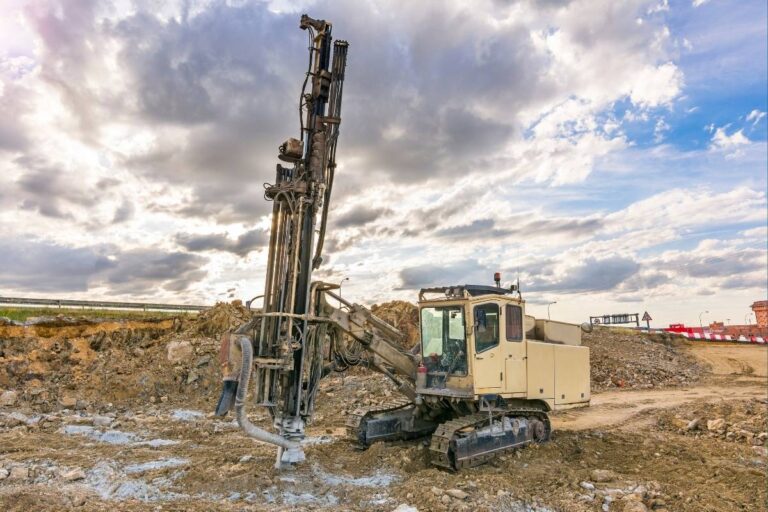
Excavators are used for trenching, excavation, and material handling. Bulldozers support earthmoving and site preparation, while loaders and dump trucks transport materials around construction sites.
For large projects, equipment productivity depends on how efficiently these machines work together.
An excavator may be capable of loading substantial quantities of material, but its productivity will decrease if insufficient dump trucks are available.
Contractors should therefore plan machinery deployment according to construction quantities and expected production rates.
Road Construction Machinery
Road projects may require motor graders, asphalt pavers, milling machines, and different types of rollers.
Each machine performs a specific function in the construction process.
Graders help prepare formation levels, asphalt pavers place pavement material, and rollers provide the required compaction.
The equipment must be suitable for the project’s engineering specifications and operating conditions.
Questions to Ask About Equipment
Before selecting a contractor, ask:
- What equipment is available for the project?
- Is the machinery owned, leased, or subcontracted?
- Can equipment be mobilised within the required timeframe?
- Are qualified operators available?
- What maintenance arrangements are in place?
- Is backup equipment available if a critical machine breaks down?
Wajid & Construction’s Machinery Resources
Wajid & Construction (Pvt) Ltd. publishes information about construction machinery used in its operations, including earthmoving, road construction, and material transportation equipment.
Clients can explore the company’s construction machinery and equipment inventory to understand its stated resources.
The availability and suitability of equipment should be confirmed for each proposed project.
2. Understand Geotechnical Conditions Before Construction
Ground conditions can significantly influence infrastructure construction methods, costs, and schedules.
A project may appear straightforward during initial planning but encounter unexpected soil conditions, groundwater, or unstable excavation areas.
These challenges can affect pavement performance, foundations, embankments, and underground utilities.
Why Soil Investigation Is Important
Consider a proposed industrial access road constructed over soft or compressible soil.
If the ground is not properly evaluated, the completed road may experience settlement or pavement deformation.
Repairs can be expensive, especially after utilities and other infrastructure have been installed.
Early geotechnical investigation helps engineers identify potential problems and select appropriate construction solutions.
Common Geotechnical Investigations
Depending on project requirements, investigations may include:
- Borehole drilling and soil sampling.
- Standard Penetration Tests.
- Laboratory soil classification.
- Groundwater observations.
- Soil compaction testing.
- Bearing capacity assessment.
- Settlement evaluation.
- Slope stability analysis.
The scope of investigation should be determined by qualified engineering professionals.
How Contractors Should Respond to Ground Risks
A reliable infrastructure contractor should be able to explain how approved geotechnical recommendations will be implemented.
Possible construction measures may include soil replacement, controlled compaction, stabilisation, or drainage improvements.
The appropriate solution depends on the engineering design and actual site conditions.
Wajid Construction’s guide to geotechnical engineering and soil investigation provides additional background on the importance of understanding subsurface conditions.
For further technical context, the Federal Highway Administration’s Geotechnical Engineering resources cover geotechnical considerations relevant to transportation infrastructure.
3. Review Construction Logistics and Project Coordination
Large infrastructure projects may cover several kilometres or involve multiple construction zones.
Managing the movement of machinery, materials, and personnel across these areas requires careful planning.
Even a technically capable contractor can experience delays if construction logistics are poorly organised.
Material Transportation
Infrastructure projects may require significant quantities of aggregates, soil, asphalt, concrete, pipes, and reinforcement materials.
The contractor should plan how these materials will reach the site and move between work areas.
Transport distances, vehicle capacity, site access, and delivery schedules can all affect productivity.
For example, a project requiring extensive embankment construction may depend on continuous transportation of suitable fill material.
If trucks cannot deliver material at the required rate, earthmoving and compaction activities may be delayed.
Managing Multiple Work Fronts
A large development may involve separate teams working on drainage, earthworks, roads, and structures.
These activities must be coordinated.
A practical construction programme should identify which tasks must be completed before others begin.
Underground utility installations, for example, may need to be inspected and backfilled before pavement construction proceeds.
Site Access and Traffic Management
Infrastructure projects located near operating roads or populated areas may require temporary access arrangements and traffic controls.
Construction vehicles must be able to enter and leave the site without creating unnecessary conflicts with existing road users.
Contractors should develop suitable arrangements based on site conditions and applicable requirements.
Weather and Seasonal Planning
Rainfall and temperature can affect excavation, soil compaction, concrete placement, and asphalt operations.
Project schedules should consider expected seasonal conditions and identify activities that may require additional protection or rescheduling.
Effective logistics planning helps maintain progress while reducing avoidable disruption.
4. Examine Material Price Fluctuation and Budget Management
Infrastructure projects often require substantial financial commitments over extended construction periods.
During that time, material prices, fuel costs, transportation expenses, and equipment-related costs may change.
An experienced infrastructure company in Pakistan should understand how these changes can influence procurement and project budgets.
Major Cost Components
Depending on the project, important materials may include:
- Cement and concrete.
- Steel reinforcement.
- Crushed stone and aggregates.
- Bitumen and asphalt materials.
- Water supply and sewerage pipes.
- Fuel and transportation supplies.
The financial impact of a price change depends on the quantities required and the timing of procurement.
Example: Aggregate Price Increase
Consider a hypothetical road development project requiring 40,000 tonnes of aggregate.
If the delivered material price increases by PKR 250 per tonne, the additional cost would be:
40,000 × PKR 250 = PKR 10,000,000
This represents an additional PKR 10 million for one material category.
The example is illustrative, but it demonstrates why even relatively small unit-price changes can affect large infrastructure budgets.
Procurement Planning
Contractors should identify materials that may have long delivery times, limited availability, or significant price volatility.
Procurement decisions should consider:
- Supplier reliability.
- Material specifications.
- Delivery schedules.
- Storage requirements.
- Transportation costs.
- Contractual pricing arrangements.
Early procurement may help manage certain risks, but it also creates storage and cash-flow considerations.
Contractual Price Adjustment
Construction contracts should clearly explain how material price changes will be handled.
Some agreements use fixed prices, while others include approved adjustment provisions.
The appropriate arrangement depends on the contract and applicable procurement requirements.
For a detailed discussion, explore Wajid Construction’s article on material price fluctuation in construction projects.
Clear procurement planning and contract terms can reduce the likelihood of disputes during project execution.
5. Check Tender Preparation and Regulatory Compliance
Large infrastructure projects may involve formal tendering, technical evaluations, and contractual approvals.
The procurement process varies depending on whether the client is a private developer, public organisation, or another contracting entity.
A contractor should understand the applicable requirements before submitting a proposal.
Reviewing Tender Documents
Before preparing a quotation, contractors should review:
- Engineering drawings.
- Technical specifications.
- Bills of quantities.
- Construction schedules.
- Contract conditions.
- Site information.
- Inspection and testing requirements.
- Relevant project risks.
Incomplete understanding of these documents can lead to inaccurate pricing and unrealistic construction programmes.
Technical and Financial Proposals
A technical proposal may describe the construction methodology, machinery deployment, staffing arrangements, and proposed project schedule.
The financial proposal should reflect realistic quantities, material costs, labour requirements, and equipment operating expenses.
An unusually low quotation should be assessed carefully to determine whether it reflects genuine efficiency or underestimated requirements.
Pakistan Engineering Council Registration
For construction work requiring professional registration, project owners should verify the contractor’s relevant registration status and eligibility.
The Pakistan Engineering Council’s official firm registration and verification resources provide information about constructor and operator firms.
Registration requirements should be assessed against the specific project.
Public Procurement Rules in Pakistan
Government projects may be subject to formal procurement rules and procedures.
The Public Procurement Regulatory Authority (PPRA) provides information about federal procurement regulations, tendering procedures, and public-sector purchasing.
Federal public procurement rules were updated in September 2026, making it important to consult the current official requirements rather than relying on outdated tendering guidance.
The applicable rules may differ for provincial or other procuring authorities.
Preparing Construction Bids
Wajid Construction also provides guidance on the construction bidding process in Pakistan, including important considerations for contractors preparing project proposals.
A well-prepared bid should demonstrate both commercial understanding and the technical resources required to execute the work.
6. Assess Project Monitoring and Performance Reporting
Large infrastructure projects generate significant quantities of operational information.
Construction progress, material consumption, equipment productivity, quality inspections, and financial commitments must be monitored throughout execution.
Without effective reporting, delays and cost overruns may remain unnoticed until they become difficult to correct.
Establishing Project Milestones
A construction programme should identify major activities and measurable completion targets.
Milestones may include:
- Completion of site preparation.
- Installation of underground utilities.
- Completion of embankment construction.
- Placement of pavement layers.
- Completion of structural components.
- Final inspection and handover.
Each milestone should have clear completion criteria.
Monitoring Actual Progress
Project reporting should compare planned progress with completed quantities.
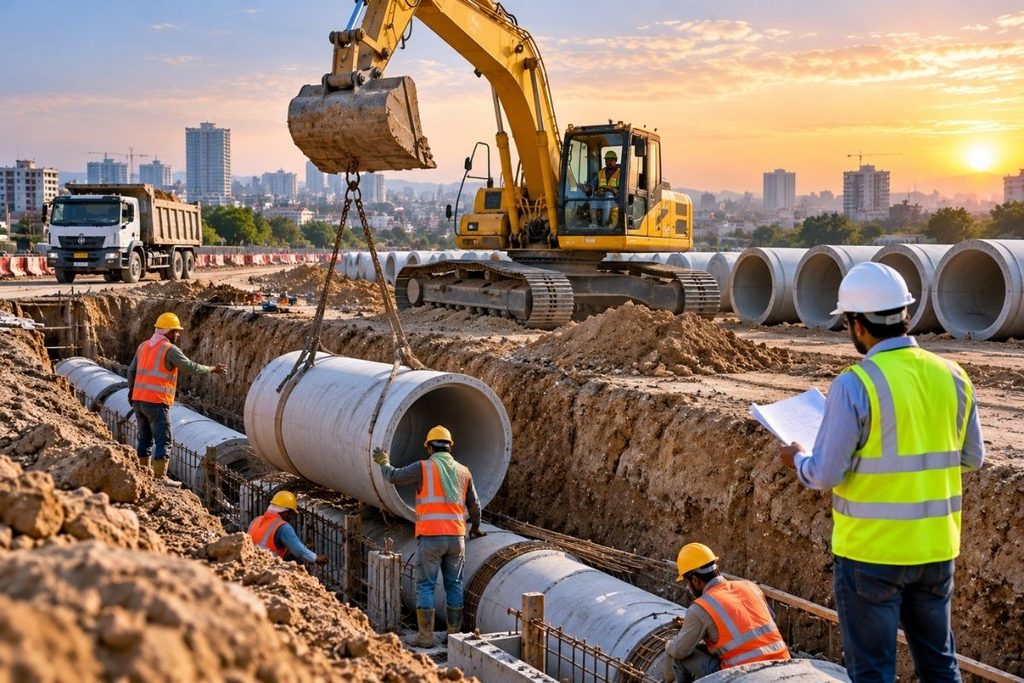
For example, a drainage project involving 15 kilometres of pipeline installation should report the installed length, outstanding quantities, and restrictions affecting future work.
This provides a more useful assessment than simply describing the project as progressing satisfactorily.
Equipment Productivity
Machinery performance can influence construction schedules and operating costs.
Contractors may monitor:
- Equipment operating hours.
- Downtime.
- Production quantities.
- Fuel consumption.
- Maintenance requirements.
- Resource utilisation.
The purpose is to identify operational problems and improve coordination.
Managing Construction Changes
Unexpected ground conditions, revised designs, and additional work may affect project scope.
A structured change-management process should record the reason for each change, the required approvals, and its potential effect on cost and time.
Clear documentation supports accountability and reduces misunderstandings.
Digital Project Management
Digital reporting tools can help organise schedules, drawings, progress records, and project correspondence.
However, technology is only useful when information is accurate and project teams consistently maintain the records.
Clients should ask potential contractors how project information will be collected, reviewed, and shared.
7. Evaluate Quality Control, Handover, and Long-Term Performance
Infrastructure assets are expected to remain functional beyond the construction period.
Roads, drainage systems, pipelines, and structural works must meet approved specifications and support their intended use.
The contractor’s approach to quality control and handover is therefore an important selection factor.
Construction Quality Control
Quality requirements vary according to the type of infrastructure.
Road construction may involve testing pavement materials, compaction, layer thickness, and finished levels.
Water supply projects may require pressure testing and inspection of pipe connections.
Concrete structures may require reinforcement inspections, concrete testing, and dimensional checks.
Testing procedures should follow the approved specifications and applicable engineering standards.
Inspection Documentation
A reliable contractor should maintain appropriate records of:
- Material approvals.
- Site inspections.
- Laboratory and field tests.
- Nonconforming work.
- Corrective actions.
- Completed construction quantities.
These records help demonstrate whether the project has been executed according to the required standards.
Infrastructure Handover
Before an asset enters operation, the client may require completion inspections, testing records, and final documentation.
Handover requirements can include as-built drawings, inspection reports, completion certificates, and maintenance-related information.
For underground infrastructure, accurate as-built drawings are especially valuable because future maintenance teams need to know where utilities have been installed.
Long-Term Maintenance
Infrastructure should also be designed and constructed with maintenance requirements in mind.
Drainage systems need suitable access for inspection and cleaning.
Roads require appropriate water management to reduce deterioration.
Utility networks should be installed in ways that support future repairs and extensions where practical.
For a broader perspective on sustainable infrastructure development, the World Bank’s infrastructure resources discuss the role of infrastructure investment in economic development and service delivery.
Considering operational performance during contractor selection can help clients make better long-term decisions.
Practical Example: Planning an Industrial Infrastructure Development
Consider a hypothetical industrial development in Pakistan requiring internal roads, site grading, stormwater drainage, sewerage networks, and water supply infrastructure.
The project covers a large area and involves multiple construction activities.
Selecting an infrastructure contractor would require evaluating several connected capabilities.
Stage 1: Site Investigation
The engineering team reviews survey information and determines the need for geotechnical investigations.
Ground conditions influence earthworks, drainage design, and construction methods.
Stage 2: Machinery Planning
The contractor identifies the excavators, loaders, dump trucks, graders, rollers, and other equipment needed for the project.
Machinery deployment is planned according to work quantities and construction stages.
Stage 3: Procurement and Cost Planning
The project team evaluates material quantities, supplier availability, transportation requirements, and potential price changes.
Procurement schedules are coordinated with construction activities.
Stage 4: Construction Execution
Earthworks, underground utilities, and road construction are organised into a practical sequence.
Separate work fronts are coordinated to minimise unnecessary disruption and rework.
Stage 5: Progress Monitoring
The contractor records completed quantities, inspection results, machinery performance, and project milestones.
Any significant changes are documented and reviewed.
Stage 6: Completion and Handover
Completed infrastructure is inspected and tested as required.
Final documentation is prepared, and the assets are handed over according to the contract.
This example demonstrates why large-scale infrastructure development requires integrated planning rather than isolated construction activities.
Why Consider Wajid & Construction for Infrastructure Projects?
Wajid & Construction (Pvt) Ltd. is a Pakistan-based construction company with stated capabilities in civil engineering and infrastructure development.
The company publishes information about its construction machinery and equipment resources, including machinery used for earthworks, road construction, and material transportation.
Its website also provides guidance on geotechnical engineering, construction bidding, and material price fluctuation.
These resources are relevant to organisations evaluating contractors for infrastructure projects.
Project owners should confirm current equipment availability, technical capabilities, registration status, and project-specific suitability before making a contractual decision.
The right contractor should be selected based on verified resources and the ability to meet the project’s engineering, financial, and operational requirements.
Frequently Asked Questions
What does an infrastructure company in Pakistan do?
An infrastructure company may undertake roads, highways, earthworks, drainage systems, sewerage networks, water supply infrastructure, and other civil engineering projects supporting transportation, utilities, and development.
How do I choose the best infrastructure contractor for a large project?
Evaluate machinery availability, engineering capability, geotechnical planning, construction logistics, procurement readiness, progress reporting, and quality control. The contractor’s resources should match the proposed project’s requirements.
Why is machinery capacity important in infrastructure construction?
Large projects often require multiple types of heavy equipment operating simultaneously. Insufficient machinery can reduce productivity, delay construction activities, and increase operating costs.
How do ground conditions affect infrastructure development?
Soil strength, groundwater, settlement characteristics, and other geotechnical conditions influence excavation, pavement construction, foundations, and structural stability.
Can material price fluctuations affect infrastructure budgets?
Yes. Changes in aggregate, cement, steel, bitumen, fuel, and transportation costs can affect project budgets. The impact depends on material quantities, procurement timing, and contractual arrangements.
How can clients verify a construction contractor in Pakistan?
Clients can review relevant company documentation, request project references, and verify applicable professional registration through official organisations such as the Pakistan Engineering Council.
What documents should be provided at project handover?
Depending on the project, handover may include inspection records, test results, as-built drawings, completion documentation, and outstanding defect records.
Conclusion: Make a Confident Infrastructure Investment Decision
Selecting the right infrastructure company in Pakistan requires more than identifying the lowest construction price.
Large-scale projects depend on machinery capacity, sound geotechnical planning, efficient construction logistics, realistic procurement strategies, regulatory compliance, effective project monitoring, and reliable quality control.
By evaluating these factors before awarding a contract, project owners can make more informed decisions and reduce avoidable construction risks.
Wajid & Construction (Pvt) Ltd. provides information about its infrastructure-related capabilities and construction resources, offering a starting point for organisations assessing potential contractors.
Planning a large-scale infrastructure project in Pakistan?
Contact Wajid & Construction (Pvt) Ltd. to discuss your construction requirements, machinery needs, and project objectives.
Phone: +92 305 9635555
Email: wajidconstructions@gmail.com
Office: 13-A Block, Wapda Town Phase I, Multan, Pakistan.