

Highway Construction Cost per Kilometer in Pakistan: Practical and Clear Guide
Highway construction cost per kilometer in Pakistan reflects far more than added lanes. Higher costs result from strict demands for heavy, continuous traffic, higher speeds, and long service life.
Recognizing the main reasons for high per-kilometer costs helps project teams create realistic budgets for building future-ready highways.
Why Highway Costs Are Calculated Differently
Highways are built for steady, large-scale traffic over long distances.
Highways have rigorous geometric, pavement, and safety requirements that differ from local roads. Features like alignment, pavement thickness, and access control increase costs, so highways are assessed separately from standard projects.
For context, compare these figures with general road pricing as explained in Road Construction Cost per Kilometer in Pakistan.
Typical Highway Construction Cost per Kilometer in Pakistan
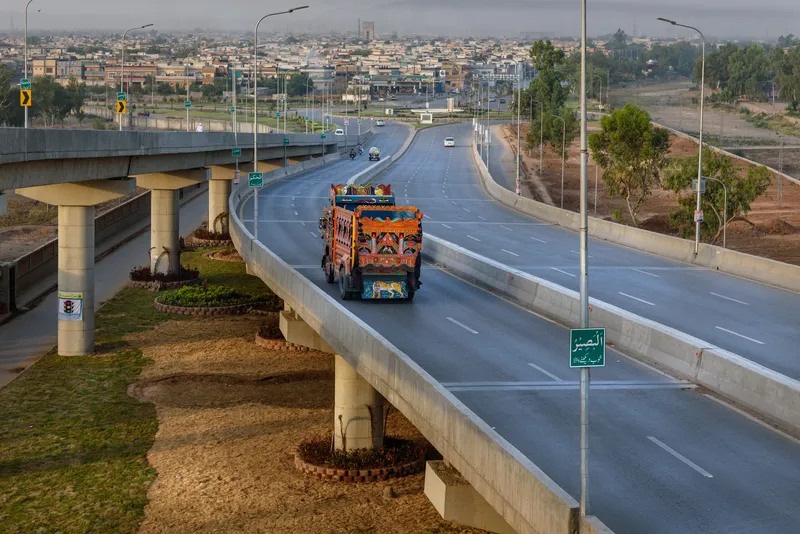
Highway construction in Pakistan typically costs between PKR 150 million and PKR 250 million per kilometer for standard infrastructure like pavement, drainage, and safety features. This estimated range covers most straightforward projects on flat land with typical design features. More complex projects, those facing challenging terrain, or those requiring special structures, can exceed PKR 350 million per kilometer. Therefore, the actual per-kilometer cost depends on project-specific factors such as terrain, design complexity, and structural requirements.
Flat, stable ground makes projects less expensive, while complexity, such as extra drainage or service roads, adds cost.
Recent projects illustrate this point. Reporting by The Nation shows the Margalla Highway extension experienced a 169 percent cost increase, even after reducing project width. This demonstrates that design changes and construction conditions can influence costs more than road length alone.
Similarly, ProPakistani reports that projects like the Kharian–Rawalpindi Motorway require significant spending on bridges, interchanges, and specialized construction methods, which increases the per-kilometer cost.
Instead of focusing only on a single figure, consider how your specific project’s conditions and requirements place it within the broader cost range detailed above. Identifying which factors apply to your project will help clarify whether your costs will be at the low or high end of the spectrum.
Elements That Have the Greatest Influence on Cost
Major cost drivers should be considered early in the planning process.
- Pavement Design Requirements
Thicker pavement with high-grade materials is needed for heavy vehicles. This increases initial costs but improves durability and reduces maintenance costs.
- Alignment and Ground Conditions
Straight routes on stable ground cost less. Curves, elevation, or weak soils require extra work, raising costs.
- Structures and Interchanges
Bridges, flyovers, and culverts sharply increase costs. Deep foundations and long spans matter more than road length.
- Safety and Operational Features
Barriers, lighting, and signage are essential safety systems that account for a significant portion of highway costs.
How Highway Budgets Are Commonly Allocated
Focusing on cost breakdowns gives clearer insight than totals alone.
Highway project budgets typically include:
- Route surveys and soil investigations
- Large-scale earthwork and embankment construction
- Pavement layers designed for heavy axle loads
- Structural works such as bridges and crossings
- Drainage systems to protect pavement life
- Traffic safety and operational installations
Each item above directly affects the per-kilometer cost.
Standards and Oversight in Highway Construction
Highway projects in Pakistan use national engineering and safety standards, overseen by the Pakistan Engineering Council, which sets benchmarks for infrastructure quality.
Putting Highway Costs Into Perspective
Highway construction costs in Pakistan reflect durability, safety, and structural requirements. Considering standards, terrain, and project features explains the variation in costs.
Understanding these cost components helps decision-makers avoid budget overruns and align highway designs with long-term performance and maintenance expectations.
Clear planning and early technical evaluation remain the strongest tools for cost control. For more insights on road and infrastructure development in Pakistan, you can browse additional articles in the Wajid Construction blog.