Best Construction Company in Peshawar: What to Consider Before Starting
Choosing the best construction company in Peshawar begins long before a contractor arrives on site. Whether you plan to build a family home, renovate an older property, or develop a commercial space, early decisions about land, approvals, structural design, budgeting, and supervision will shape the project’s cost and reliability. Peshawar has a mix of established urban neighborhoods, expanding residential developments, and busy commercial corridors, so a one-size-fits-all building plan is rarely enough.
This guide takes a pre-construction approach: nine checks property owners can complete before signing a building contract. It also explains which questions to ask prospective contractors, how to document your expectations, and when to involve independent specialists. The goal is not simply to find a low quote, but to create a project that can be delivered safely, transparently, and with fewer surprises.
1. Confirm Land Ownership, Boundaries, and Permitted Use
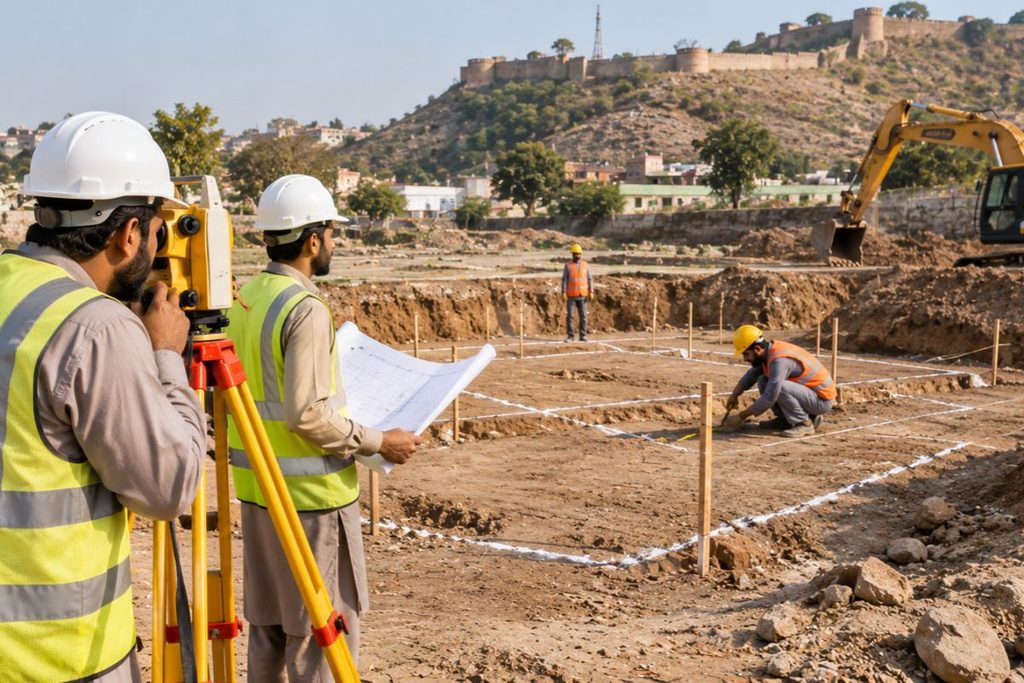
Before paying for drawings or materials, verify that the plot’s ownership documents and physical boundaries match. Ask a qualified surveyor to confirm dimensions, access, neighboring structures, and any encroachments. A discrepancy of even a small distance can change a staircase layout, parking arrangement, or the space available for ventilation.
Check whether the land is approved for your intended use. A residential plot is not automatically suitable for a shop, warehouse, clinic, or multi-unit rental property. Development rules can vary by location and the authority responsible for the area. Obtain current written guidance from the relevant local authority or housing society rather than relying on a contractor’s verbal assurance.
Questions to resolve before design starts
- Do the ownership papers, survey and site measurements agree?
- Are there required setbacks, height limits, parking rules or land-use restrictions?
- Is the plot reachable by delivery trucks and construction equipment?
- Are neighboring foundations, retaining walls or shared boundaries likely to affect excavation?
Resolving these matters early helps prevent redesigns after construction has started.
2. Investigate the Ground Before Choosing a Foundation
Foundation decisions should follow the site’s actual conditions, not a standard drawing reused from another plot. Ground bearing capacity, fill material, groundwater, drainage, and nearby excavation can influence the structural solution. Ask a qualified geotechnical professional whether soil investigation is appropriate for your building’s size, use, and site conditions.
For example, a site with substantial uncontrolled fill may require a different approach from a plot on competent natural ground. Similarly, a basement near adjoining properties creates excavation and water-management questions that a ground-floor-only house may not face. A competent structural engineer should interpret the findings and specify the foundation design.
Do not accept a promise that a particular footing depth or concrete mix is suitable everywhere in Peshawar. Site-specific engineering is more reliable than a generic rule of thumb.
3. Design for Peshawar’s Seasonal Conditions
Peshawar experiences hot summers and cooler winters. That seasonal contrast makes building orientation, shading, ventilation, insulation, roof detailing, and moisture protection important design decisions. These features should be discussed during architectural planning, not added as expensive corrections near completion.
Practical design choices to review
- Solar exposure: Position windows and shading devices to manage heat gain while preserving useful daylight.
- Roof performance: Specify appropriate waterproofing, insulation and drainage slopes.
- Air movement: Consider cross-ventilation and the placement of openings, especially for family living spaces.
- Rainwater: Plan roof outlets and site drainage so water does not collect against foundations or neighboring properties.
- Material durability: Select finishes and external details suitable for local weather and maintenance conditions.
Climate-responsive design can improve comfort and reduce avoidable maintenance, but the right choices depend on the building’s orientation, occupancy, and budget.
4. Establish the Approval Path Before Mobilization
A reputable contractor should be able to explain what information is needed for the approval process, while recognizing that the owner and relevant design professionals may have separate responsibilities. Depending on the site, permissions may involve the applicable municipal, development, cantonment, or housing-society authority. Do not assume the same approval procedure applies throughout Peshawar.
Ask for a document register showing architectural drawings, structural drawings, required signatures, submission dates, approval status, and any conditions attached to permissions. Starting major work before the appropriate approvals are in place can create legal and financial risks.
For professional credentials, consult the Pakistan Engineering Council and confirm the relevant registration details where applicable. Registration alone does not replace checking a contractor’s actual experience and project team.
5. Build a Budget Around Quantities, Not Guesswork
A useful construction budget separates what is known from what remains uncertain. Instead of accepting a single lump-sum number with little explanation, request a written scope and a bill of quantities or equivalent detailed breakdown. This helps you see whether two contractors are pricing the same work.
Typical cost groups include site preparation, excavation, foundations, structural frame, masonry, roofing, electrical and plumbing work, finishes, external works, permits, professional fees, and a contingency allowance. Identify items that are excluded as clearly as those included.
A simple comparison example
Contractor A may quote a lower price but exclude waterproofing, boundary walls, utility connections, and kitchen fittings. Contractor B may include those items. Without a scope comparison, the cheaper number can be misleading. Request the same specification from each bidder, then compare quantities, brands or performance standards, labor obligations, and completion terms.
Construction input costs can change. The Pakistan Bureau of Statistics provides economic and price information that can help owners understand broader trends, although project quotations must still be checked against current local supplier offers.
6. Decide How Materials Will Be Purchased and Verified
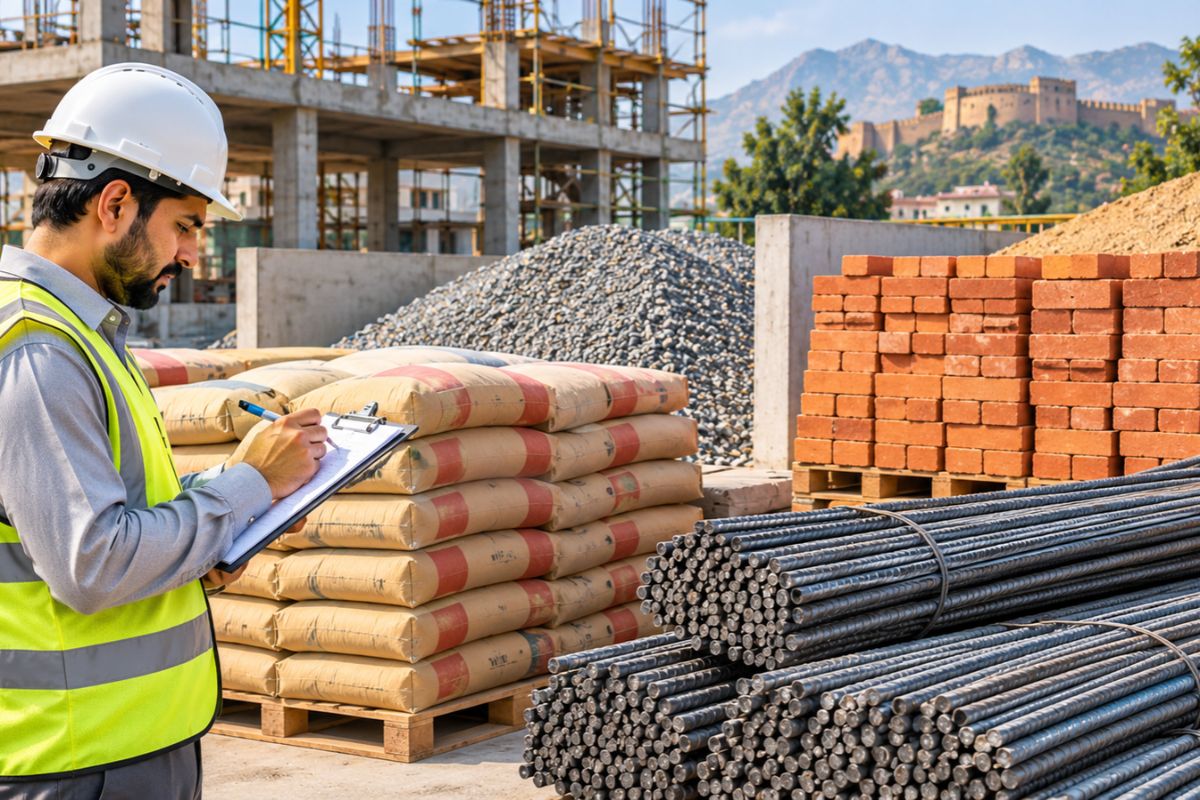
Procurement affects both quality and cash flow. Some owners prefer a contractor to supply labor and materials under a clearly defined specification. Others buy major materials directly and hire labor separately. Neither approach is automatically superior: the best choice depends on your available time, technical knowledge, ability to store supplies securely, and willingness to coordinate deliveries.
For structural materials, insist on specifications approved by the design engineer. Maintain delivery records, supplier invoices, inspection notes, and any required test reports. Establish who has authority to reject damaged or nonconforming materials. The site supervisor should not have to guess whether a substitute product is acceptable.
Owners considering formal contractor selection can also review Wajid Construction’s discussion of the construction bidding process to understand why clear tender documents and consistent evaluation criteria matter.
7. Plan Access, Deliveries, and Neighborhood Safety
Urban construction is not only about the building footprint. Narrow streets, limited staging space, overhead cables, pedestrian movement, and nearby homes or shops can complicate deliveries and excavation. Before work begins, ask the contractor for a basic site logistics plan.
- Where will bricks, steel, sand and other materials be unloaded and stored?
- How will pedestrians and neighboring properties be protected?
- What arrangements are needed for waste removal and dust control?
- When will noisy or disruptive work occur, subject to applicable rules?
- How will vehicles and equipment enter and leave without obstructing access?
These details are especially important for infill projects surrounded by existing buildings. A well-organized site can reduce disruption and make work easier to inspect.
8. Put Quality Checks and Payment Milestones in Writing
The best construction company in Peshawar for your project should be willing to explain how work will be checked before it is covered up. Important inspection points may include excavation and foundation preparation, reinforcement before concrete placement, masonry alignment, concealed plumbing and electrical services, roof waterproofing, and final testing.
Link payments to measurable milestones and documented progress rather than vague calendar dates alone. Specify who signs off each stage, how defects are recorded, and how variations are approved. If an owner requests a layout change midway through construction, the contractor should provide the cost and schedule implications before proceeding.
Clear documentation is particularly useful when several subcontractors work on one property. It helps prevent misunderstandings about who is responsible for corrections, cleanup, and final handover.
9. Test the Contractor’s Ability to Handle Problems
Every construction project carries uncertainty. Weather interruptions, delayed deliveries, unexpected ground conditions, design revisions, and labor availability can affect the schedule. A capable contractor does not claim that problems are impossible; instead, they show how issues will be identified, communicated, and resolved.
Ask prospective firms for examples of completed projects similar in scale and complexity to yours. Where possible, request permission to speak with past clients or visit completed work. Discuss the proposed site manager, reporting frequency, subcontractor oversight, and escalation process for disagreements.
If your project includes extensive siteworks, access roads, or related civil works, reading about road construction considerations in Pakistan can help frame questions about groundwork, equipment coordination, and surface performance. The relevance of those services to your specific plot should be confirmed with the contractor.
A Pre-Construction Timeline for Peshawar Property Owners
A practical sequence helps keep decisions in the right order. The timing varies with the project’s size, approval requirements, and complexity, but the stages below provide a useful planning framework.
- Define the brief: Set out intended use, space requirements, approximate budget and priorities.
- Verify the plot: Check ownership, boundaries, access and applicable land-use conditions.
- Commission studies: Arrange site surveys and any appropriate geotechnical assessment.
- Prepare designs: Coordinate architecture, structural engineering and building services.
- Confirm approvals: Follow the procedure required by the relevant authority.
- Invite comparable bids: Give contractors the same drawings, scope and specifications.
- Review capability: Check experience, personnel, references, schedule and quality controls.
- Sign the contract: Document price, milestones, exclusions, variations and dispute procedures.
- Mobilize: Confirm safety arrangements, logistics, reporting and inspection responsibilities.
Red Flags When Evaluating Construction Proposals
Some warning signs are easy to overlook when an attractive price is offered. Be cautious if a bidder refuses to provide a written scope, insists that structural drawings are unnecessary, cannot explain who supervises the site, demands disproportionate advance payments without safeguards, or promises an unrealistic completion date without a credible work plan.
Also question quotations that use undefined phrases such as “premium quality” without naming measurable standards. A stronger proposal identifies materials or performance requirements, explains what happens if products are unavailable, and describes how defects will be corrected.

Frequently Asked Questions About Construction in Peshawar
How do I identify the best construction company in Peshawar for my project?
Start with firms experienced in your type of building. Compare written scopes, relevant credentials, completed work, client references, supervision arrangements, and payment terms. The best fit is the company that can demonstrate a realistic plan for your specific site and budget.
Do I need a soil test before building a house?
The need and scope of geotechnical investigation depend on the building, location, ground conditions, and engineer’s assessment. Consult a qualified professional before choosing a foundation or starting excavation.
Which authority approves building plans in Peshawar?
The responsible authority depends on where the property is located, including whether it falls within a particular municipal, development, cantonment, or housing-society jurisdiction. Confirm the current process directly with the relevant office.
Is a fixed-price construction contract always safer?
Not necessarily. A fixed price can improve cost predictability when the design and scope are complete, but unclear exclusions and frequent changes can still cause disputes. Review specifications, allowances, variation rules, and payment conditions carefully.
What should I inspect before the final payment?
Review the agreed snag list, visible finishes, doors and windows, drainage, electrical and plumbing operation, waterproofing concerns, cleanup, and any required completion documents. Arrange independent professional inspection where appropriate.
Final Thoughts: Start With a Clear Plan, Not Just a Quote
Finding the best construction company in Peshawar is ultimately about matching a capable team to a well-defined project. Verify the site, obtain appropriate engineering input, understand the approval path, compare like-for-like quotations, and establish inspection and communication procedures before work begins. These steps make it easier to assess contractors fairly and protect the investment you are making in your property.
For more construction planning resources, explore Wajid Construction. If you are considering the company for a specific project, contact its team to confirm service availability, scope, and suitability for your location.