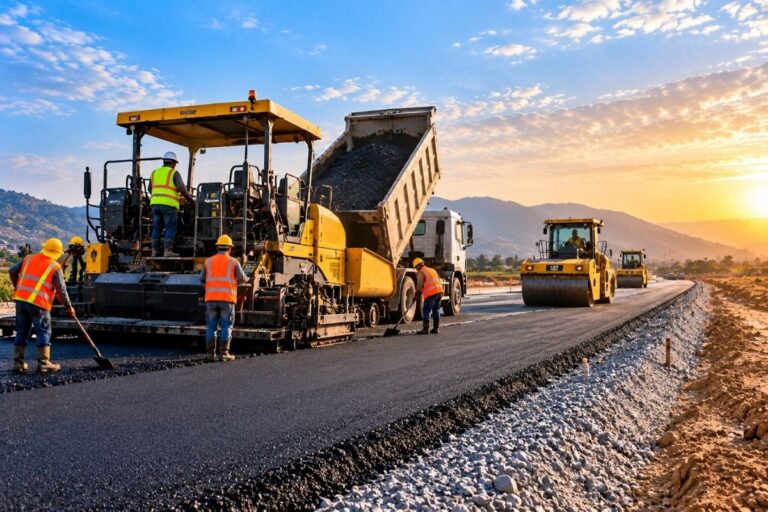

Why Road Compaction Is Important for Strong and Stable Roads

Have you ever seen a road that sinks or cracks only a short time after being built?
This usually happens when the ground beneath it is not compacted well enough.
Road compaction is one of the most important steps in road construction because it helps create a strong and stable base that can support traffic for many years. When this process is done correctly, roads stay smoother, last longer, and remain safer for everyone who uses them.
What Road Compaction Really Means
Road compaction is the process of pressing soil, gravel, or asphalt layers to make them firm and stable. This is one of the first steps in building a durable road. When materials are compacted properly, they become stronger and less likely to shift under pressure.
Here are a few reasons why this step matters:
- It removes air gaps that weaken the road base
- It creates a firm foundation that supports heavy vehicles
- It reduces early cracking and sinking
A well-compacted base gives the entire road structure the strength it needs to handle daily use.
According to the Federal Highway Administration, proper compaction is essential for building strong pavement layers that can resist pressure and long-term wear.
How Road Compaction Supports Road Durability
When a road is built on a loose or soft surface, it starts to wear down quickly. Heavy trucks, changing temperatures, and moisture all cause more damage when the base is weak. Proper road compaction prevents these problems by making the layers beneath the surface firm and stable.
A compacted base also helps the road stay even. This reduces bumps, surface movement, and uneven areas that make driving uncomfortable. With a solid structure underneath, the top layers stay in place and last much longer.
Compaction works closely with a strong base and subbase, as described in our post on: Compacted gravel base layer prepared for road construction
Why Road Compaction Improves Safety
A road built without proper compaction becomes unsafe over time. Soft spots can form as vehicles pass, which creates dips and cracks that distract drivers. In some cases, the road can even become uneven enough to cause damaged tyres or reduced control.
With good road compaction, the surface remains stable, smooth, and safer to drive on. Drivers experience fewer sudden changes and have more control over their vehicles. This makes everyday travel more comfortable and reduces the chances of unexpected accidents caused by road defects.
How Proper Compaction Reduces Long-Term Costs
Communities spend a lot of money repairing roads that fail too early. Most of these repairs happen because the base was not compacted well during construction. When road compaction is done correctly, future maintenance becomes much easier and far less expensive.
Proper compaction helps by:
- reducing the need for frequent repairs
- lowering material waste
- preventing full road reconstruction
These long-term savings allow more funds to be used for new projects instead of fixing old ones.
The Role of Equipment in Effective Road Compaction
Successful road compaction depends on the right equipment and careful planning. Rollers, compactors, and testing tools help construction teams measure the strength of the layers and adjust the process when needed. Skilled workers use these tools to make sure each layer reaches the right level of firmness before the next layer is added.
This step-by-step process creates a strong and reliable foundation that protects the entire road structure.
Proper compaction also helps roads stay stable during seasonal changes. When the foundation stays firm, the surface remains smooth and dependable even under heavy daily traffic.
Conclusion
Road compaction is one of the most important steps in building a strong and long-lasting road. It creates a solid base, improves safety, and reduces future repair costs. With proper compaction, roads stay smoother and more stable, which helps communities enjoy safe and reliable travel for many years.
Stay with us for clear and practical insights about the steps that help build stronger and safer roads for everyone.