Why Geotechnical Engineering Is Critical for Successful Infrastructure Projects in Pakistan
Every successful construction project begins below the surface. Before foundations are poured or structures begin to rise, engineers must understand the ground on which everything will be built. This is where geotechnical engineering plays a vital role.
Whether constructing highways, bridges, commercial buildings, industrial facilities, dams, airports, or residential developments, geotechnical engineering provides the information needed to design safe, stable, and long-lasting structures. Without proper soil investigation and foundation planning, even well-designed buildings can experience settlement, cracking, or structural failure.
As Pakistan continues investing in infrastructure development, the importance of professional geotechnical engineering has never been greater. Proper site investigations reduce project risks, improve construction quality, and help contractors make informed engineering decisions before construction begins.
Quick Insight: Investing in professional geotechnical investigations before construction can significantly reduce structural risks, project delays, and unexpected construction costs.
What Is Geotechnical Engineering?
Geotechnical engineering is a specialised branch of civil engineering that studies soil, rock, groundwater, and other earth materials to determine how they will behave under construction loads. Engineers analyse ground conditions to design foundations capable of safely supporting buildings and infrastructure.
Geotechnical engineers evaluate soil strength, bearing capacity, groundwater levels, settlement characteristics, slope stability, and other geological conditions before recommending foundation systems.
The information collected during geotechnical investigations helps architects, structural engineers, and contractors make better construction decisions while improving overall project safety.
Why Geotechnical Engineering Matters
Every construction site has unique ground conditions. Even neighbouring properties may have completely different soil characteristics. Assuming that soil conditions are the same across different locations can result in expensive engineering mistakes.
Professional geotechnical engineering ensures that structures are designed according to actual site conditions rather than assumptions. This improves safety, reduces construction risks, and increases the lifespan of infrastructure assets.
The Importance of Site Investigation
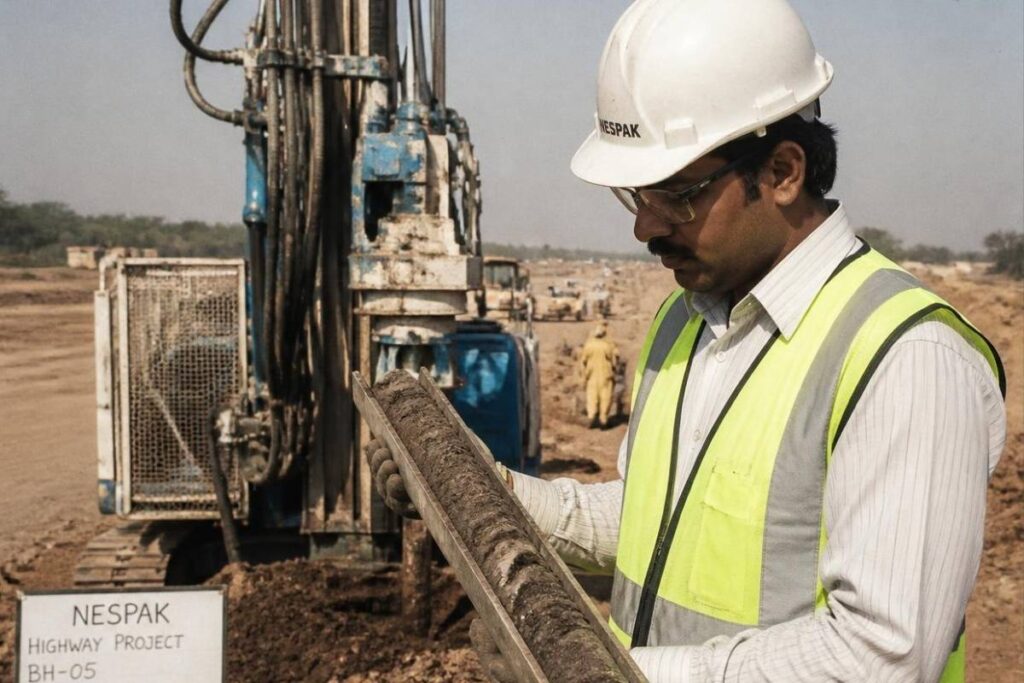
Site investigation is the first step in any geotechnical engineering project. Engineers collect detailed information about subsurface conditions before structural design begins.
Soil Investigation
Soil samples are collected from different depths to determine strength, composition, moisture content, density, and load-bearing capacity.
Groundwater Assessment
Groundwater levels influence excavation methods, foundation design, waterproofing requirements, and long-term structural performance.
Rock Evaluation
Where rock formations are present, engineers assess their strength and suitability for supporting heavy structures.
Slope Stability Analysis
For hilly terrain and infrastructure projects, engineers evaluate slope stability to reduce the risk of landslides and erosion.
Common Geotechnical Tests
Several engineering tests are performed to evaluate ground conditions before construction begins.
- Standard Penetration Test (SPT).
- Soil bearing capacity testing.
- Moisture content analysis.
- Compaction testing.
- Grain size analysis.
- Atterberg limits testing.
- Permeability testing.
- Groundwater monitoring.
These tests provide valuable engineering data that helps determine the most suitable foundation design for the project.
Foundation Design Depends on Soil Conditions
The type of foundation selected for a project depends largely on geotechnical findings. Strong soil may support shallow foundations, while weaker ground may require deep foundations such as piles or drilled shafts.
Choosing the wrong foundation system can result in differential settlement, structural cracks, excessive maintenance costs, and reduced building life.
Benefits of Professional Geotechnical Engineering
Improved Structural Safety
Accurate ground investigations help engineers design safer structures capable of supporting expected loads throughout their service life.
Reduced Construction Risk
Identifying poor soil conditions early allows engineers to recommend suitable design modifications before construction begins.
Better Budget Control
Unexpected ground conditions often cause major cost overruns. Early investigations reduce uncertainty and improve budgeting accuracy.
Long-Term Performance
Properly designed foundations improve durability while reducing future repair and maintenance costs.
Resources for Better Infrastructure Planning
Strong infrastructure projects begin with proper planning, engineering expertise, and quality construction practices. To understand how quality construction is delivered across different projects, explore the Wajid Construction Projects page. You may also find our guide on choosing the right concrete grade for foundations and slabs, which explains how foundation materials contribute to structural strength. For additional technical information on geotechnical engineering, visit the Institution of Civil Engineers (ICE).
Applications of Geotechnical Engineering in Infrastructure Projects
Modern geotechnical engineering supports nearly every type of infrastructure project. Before construction begins, engineers analyse ground conditions to determine whether the site can safely support the planned structure and to identify any challenges that may require special foundation or ground improvement solutions.
Road and Highway Construction
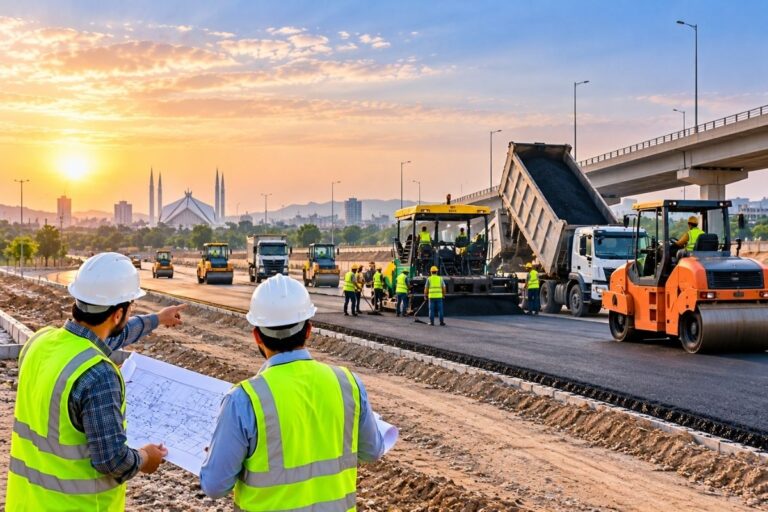
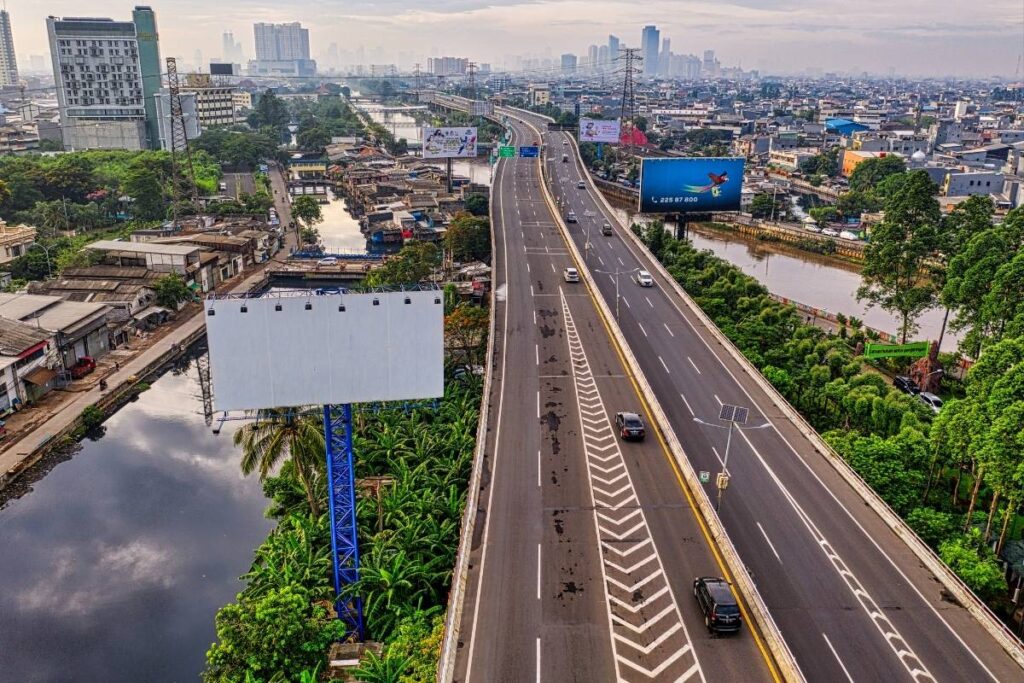
Roads and highways require stable subgrades to withstand heavy traffic loads over many years. Geotechnical investigations help engineers determine soil strength, drainage requirements, pavement thickness, and suitable construction methods.
Bridge Foundations
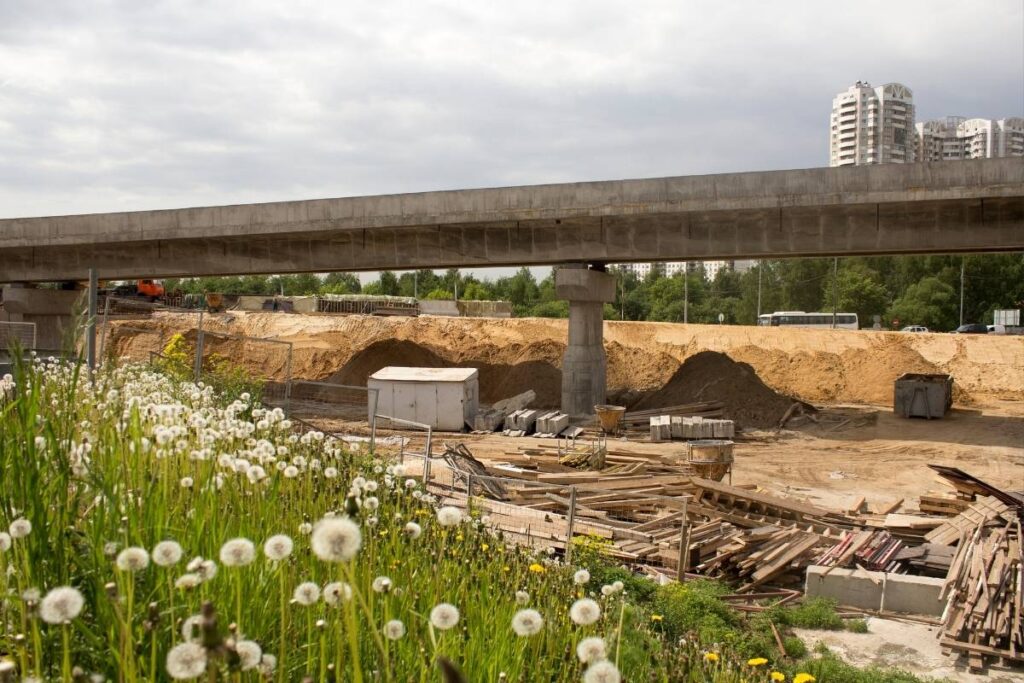
Bridge piers and abutments must safely transfer enormous loads to the ground. Soil investigations help determine pile depth, bearing capacity, and foundation design to ensure long-term structural stability.
Commercial and High-Rise Buildings
Large commercial developments often require detailed geotechnical reports before foundation design begins. Engineers evaluate settlement potential, groundwater conditions, and structural loading to minimise future risks.
Industrial Facilities
Factories, warehouses, power plants, and manufacturing facilities frequently contain heavy machinery that places substantial loads on foundations. Proper geotechnical engineering helps prevent excessive settlement and operational problems.
Common Soil Challenges in Pakistan
Pakistan has a wide variety of soil conditions that can influence construction projects. Understanding these conditions before construction begins helps engineers develop safe and cost-effective foundation solutions.
- Soft clay soils.
- Loose sandy deposits.
- Expansive clay soils.
- High groundwater levels.
- Rocky terrain.
- Flood-prone areas.
Each of these conditions requires different engineering solutions, making professional site investigations essential for successful project planning.
Ground Improvement Techniques
When natural soil conditions are unsuitable for construction, engineers can improve ground performance using specialised techniques.
Soil Compaction
Compaction increases soil density and improves its load-bearing capacity, making it suitable for supporting structures.
Soil Stabilisation
Materials such as lime or cement may be added to weak soils to improve strength and reduce settlement.
Pile Foundations
Where surface soils cannot support structural loads, piles transfer loads to stronger soil layers or rock beneath the surface.
Drainage Improvements
Effective drainage systems reduce groundwater-related problems and improve long-term foundation performance.
Modern Technology in Geotechnical Engineering
Today’s geotechnical engineering projects increasingly rely on advanced technologies that improve investigation accuracy and construction efficiency.
- Geographic Information Systems (GIS).
- Drone site surveys.
- Digital borehole logging.
- Ground-penetrating radar.
- 3D geological modelling.
- Computer-based foundation analysis.
These technologies provide more accurate engineering data, allowing project teams to make better-informed design decisions.
How Geotechnical Engineering Saves Money
Some project owners view geotechnical investigations as an additional expense. In reality, they are often one of the most valuable investments in the entire construction process.
Early site investigations reduce the likelihood of unexpected excavation conditions, foundation redesigns, structural repairs, construction delays, and legal disputes. The cost of professional geotechnical engineering is typically much lower than the cost of correcting foundation failures after construction.
Engineering Tip: Never select a foundation system without a proper geotechnical investigation. Reliable soil information allows engineers to design foundations that balance safety, durability, and cost efficiency.
Choosing an Experienced Construction Partner
Successful infrastructure projects require collaboration between geotechnical engineers, structural engineers, architects, project managers, and experienced construction contractors. Selecting a qualified construction company helps ensure that engineering recommendations are correctly implemented on-site.
Professional project management, quality control, and adherence to engineering specifications all contribute to better project outcomes and improved long-term performance.
Final Thoughts
Geotechnical engineering is one of the most important foundations of successful infrastructure development. From highways and bridges to commercial buildings and industrial facilities, understanding ground conditions allows engineers to design safer, stronger, and more durable structures.
Investing in proper site investigations, professional engineering analysis, and quality construction practices reduces project risks while improving safety, budget control, and long-term performance. As Pakistan continues expanding its infrastructure network, geotechnical engineering will remain an essential component of sustainable development.
Looking for Reliable Construction Expertise? Explore our completed developments on the Wajid Construction Projects page and see how professional planning, engineering, and quality construction contribute to successful infrastructure projects across Pakistan.
To learn more about international geotechnical engineering practices and civil engineering standards, visit the International Society for Soil Mechanics and Geotechnical Engineering (ISSMGE).
This guide is intended for developers, engineers, contractors, infrastructure planners, investors, and property owners seeking a better understanding of geotechnical engineering and its role in successful infrastructure projects.